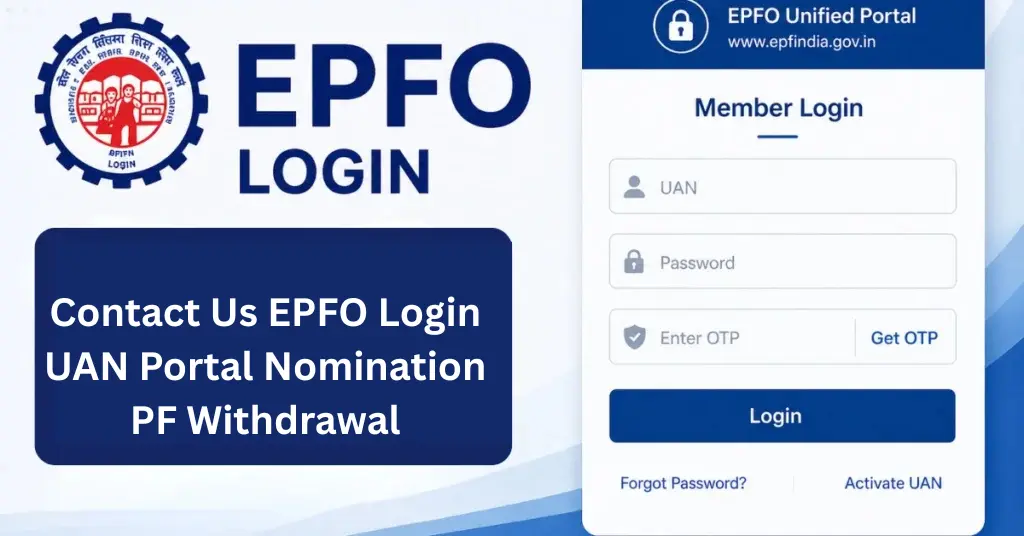
Contact Us EPFO Login UAN Portal Nomination PF Withdrawal
EPFO Login Portal UAN Portal Nomination PF Withdrawal Login UAN Portal Nomination PF Withdrawal support page for EPFO Login, UAN Portal, KYC updates, e-Nomination, and PF Withdrawal 2026. We understand that managing your Employees’ Provident Fund (EPF) account can sometimes be confusing, especially when dealing with online services. Our goal is to help users find clear guidance and support for all EPFO-related services in one place.
The EPFO UAN Portal is an essential online platform that allows employees to access their provident fund details, update personal information, and manage account services easily. If you are facing issues with login, password reset, or UAN activation, we are here to guide you with simple steps and solutions to help you access your account without difficulty.
declare beneficiaries for their EPF account
KYC (Know Your Customer) verification is an important step in ensuring your EPF account remains active and secure. Users often need help linking Aadhaar, PAN, and bank details with their UAN. Our support helps you understand the correct process for updating KYC information so that your EPF services remain smooth and uninterrupted.
e-Nomination is another important feature that allows members to Many users are unsure about how to complete or update their nomination details online. We provide easy guidance to help you complete your e-Nomination process correctly, ensuring your savings are secured for your family. PF withdrawal in 2026 has become more streamlined through online services, but users may still face challenges such as claim rejection, document errors, or processing delays. Our contact support aims to assist you in understanding the correct withdrawal process, eligibility rules, and troubleshooting common issues related to PF claims
Contact Support
If you need help with EPFO Login, UAN activation, KYC updates, e-Nomination, or PF withdrawal issues, you can reach out to us for guidance. We aim to provide quick and clear support to resolve your queries and make your EPF experience easier. Declaring beneficiaries for your EPF account through the e-Nomination facility is an important step to ensure that your savings are securely passed on to your loved ones in case of any unforeseen event. This process allows EPF members to officially register one or more nominees who will have the legal right to receive the provident fund amount. It helps avoid legal complications and ensures smooth settlement of funds without delays.
Through the EPFO UAN portal, members can easily add or update their nominees anytime. You can choose your spouse, children, or other dependents as beneficiaries and assign share percentages as per your preference. Completing e-Nomination is highly recommended because it provides financial security.
Frequently Asked Questions
Final Thoughts
EPFO services like UAN login, KYC updates, e-Nomination, and PF withdrawal are essential for every employee managing their retirement savings. Understanding these processes can make your experience smoother and more secure. Our aim is to guide you with simple and reliable information so you can handle your EPF account without stress and stay financially protected for the future. Managing your EPFO account through the UAN portal, including login access, nomination updates, and PF withdrawal services, is essential for securing your financial future.
These digital facilities make it easier for employees to stay in control of their provident fund details and ensure that all records remain accurate and up to date. Understanding each process helps reduce errors and makes transactions smoother and more reliable. If you ever face any difficulty related to EPFO login, KYC verification, e-Nomination, or PF withdrawal, timely support and proper guidance can make a big difference. Always ensure your details are correct and your nomination is updated so that your benefits are safely secured for you and your family.